This issue: A conversation with Rachel Reid’s agent about hockey romance going mainstream, a report from the Half His Age launch, and a January release you might consider skipping. |
|
|
| Senior newsletter editor, New York |
|
|
Rachel Reid’s Agent, Deidre Knight, Believes in the Fanfic-to-Romance Pipeline “It’s driving trends on the publishing end a lot more than people realize.”
|
|
|
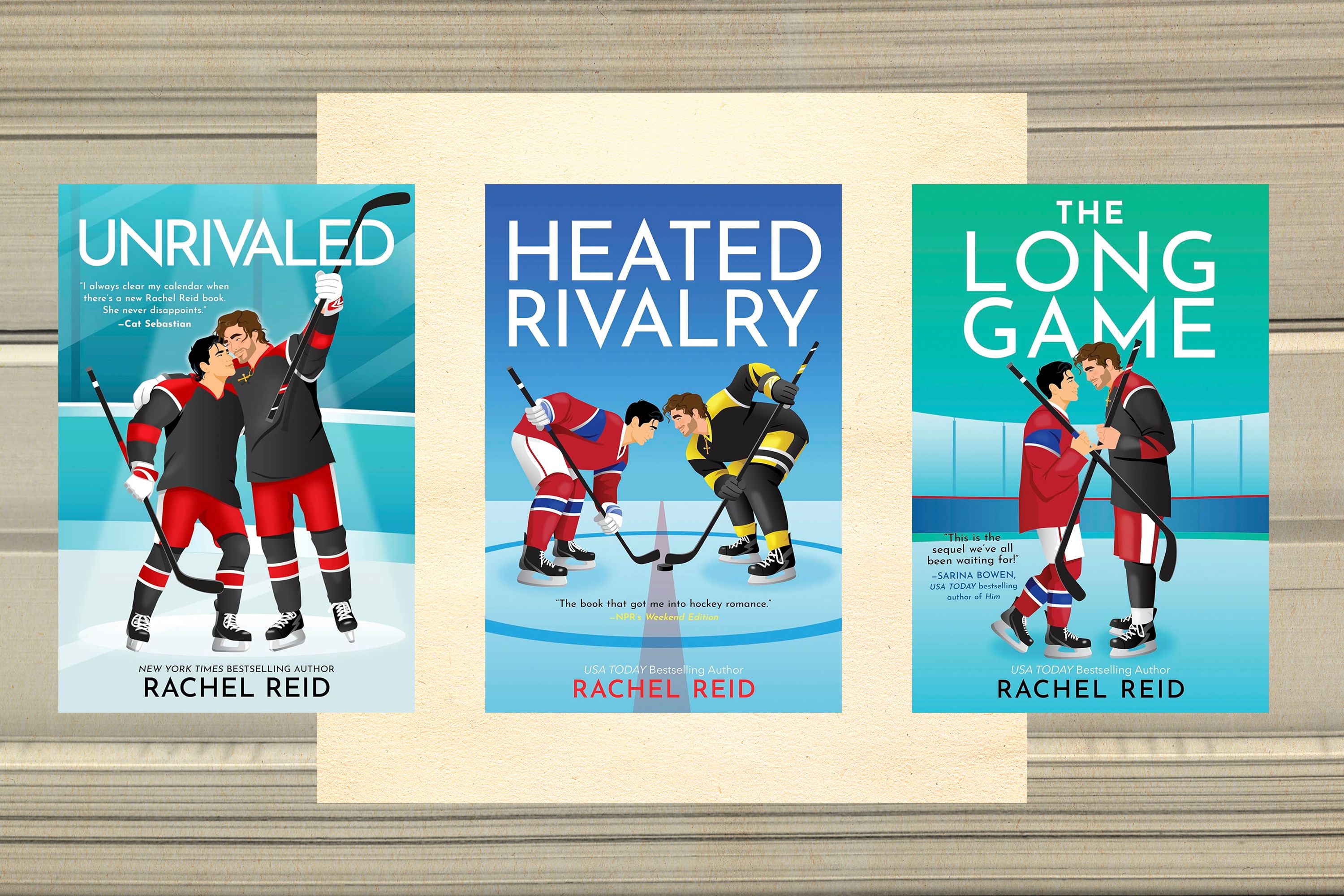
You may know the story by now: Rachel Reid began posting what would become Heated Rivalry on the fan-fiction site Archive of Our Own, one chapter at a time. Eventually, the Halifax-based author reportedly removed the posts, reworked the book, submitted it to publishers, and sold it in 2019 to Carina Press, a digital-first imprint at Harlequin. While the first book in her “Game Changers” series found a solid fan base among romance readers, no one expected just how many more would join them. Jacob Tierney’s TV adaptation created fans so thirsty for more that they dared to go where the majority of Americans now rarely step foot: the bookstore. After some initial hiccups in meeting readers’ suddenly explosive demand, Reid’s series has now sold approximately 2 million copies.
It’s not uncommon for romance writers to cut their teeth on fan-fiction sites — or for agents and editors to discover them there — possibly because these spaces first appeared when many of these authors were teens camped out in front of the family computer for long stretches at a time. “You’re seeing writers who started on Wattpad or Archive of Our Own or on Twilight fan fiction now developing into authors,” says Christa Desir, VP editorial director at Bloom. “That’s how a lot of people start falling in love with writing.” Desir told me that she does a lot of cold outreach to writers she discovers while hunting for commercial-fiction opportunities in fandom spaces. But moving a fan-fiction author into traditional publishing while avoiding IP issues usually requires an act of translation. “It’s a conversation about changing the setting, changing the names, creating a more universal thing so that you're not stepping on someone else’s IP,” Desir says. She adds that when Alchemized — one of several recent titles that originally began as a Dramione (Draco-Hermione of Harry Potter) fan fiction — came to her on submission, “it was a completely different world than when it was Manacled.”
Sifting through fan fiction is not necessarily the mainstream approach, partially owing to potential IP issues, though that’s less of a problem when it comes to hockey romance, which, it turns out, fanfic sites have been full of for years. Whether on AO3 or BookTok or Kindle Unlimited, the editors and agents I spoke to are all looking to the indie market for the next big thing. Michelle Grajkowski says her agency receives over a thousand submissions a month, so there isn’t time to go digging through fics, especially if there’s no guarantee that it will translate. When Bridgerton saw a bump in sales following the TV series, Grajkowski hoped a path would be cleared for more regency romance. “That didn’t happen. Just because something’s translating well in fanfic or in the indie world or streaming services, it doesn’t necessarily make a natural leap over into what’s happening in the trad market,” she says.
Whether “Game Changers” fever ushers in more hockey romances or more gay sports stories remains to be seen. Industry sources told me that it’s likely fans will splinter off based on whatever element of Heated most tickled their fancy, even if what that looks like is filling the bleachers at IRL games. (Last week, StubHub reported a 75 percent increase in hockey-game searches.) Harlequin editor John Jacobson highlighted other challenges facing publishers who want to push more into queer romance: “A lot of marginalized people’s rights are being attacked in the U.S., including queer people’s, and we’ve seen large mass retailers being more hesitant to take on content that could be seen as controversial.”
That said, there’s plenty of boy-aquarium romance to come this year, including Livy Hart’s Dirty Hit, Rina Kent’s Tempting Venom, and an Amazon Prime adaptation of Elle Kennedy’s “Off-Campus” series, which she originally self-published. Romance editors and agents — including Deidre Knight, who reps Rachel Reid — are eager to take advantage of the mainstreaming of hockey romance where possible. I spoke to Knight — first over email, then while she and her daughter were on their way to a hockey game — about how she came across Reid’s work and the relationship between fan fiction and romance.
What initially drew you into “Game Changers”? Did you foresee the books being this huge?
I am a massive hockey fan, which has made me a hockey-romance reader. That’s how I found Rachel Reid — I went looking for a great hockey romance and found Heated Rivalry on Goodreads. I immediately fell in love with Ilya and Shane’s story, as well as with her full breadth of characters, humor, and world. I even made my husband read it. The story grabbed hold of me and wouldn’t let go. I kept rereading it until I finally realized that if I didn’t reach out and see if Rachel already had an agent, I’d be so disappointed if someone else signed her on. I messaged her editor, Kerri Buckley of Carina Press, in the hopes that Rachel might be interested in talking to me. Turned out, because she was digitally published, she was not repped by anyone, and we made a great connection around our mutual love of hockey and books. Then I signed her on and did subsequent books in the series. I did the film and TV rights for the show.
Incidentally, when Jacob Tierney first approached us, he said the same thing: that he’d read the book over and over and finally decided if he didn’t do something, he’d be so remorseful if someone else picked up the series. The show is so true to the original material, so her huge fandom felt seen. I pushed them to pick up The Long Game and continue the Ilya-and-Shane story.
Where do you typically look for talent? Do you frequent any fan-fiction sites?
I have loved fic for a very long time. Twenty-five years ago, I used to write some, so frequenting those sites is natural to me. People can write anything they want; it puts the reader in the driver’s seat, and with all the subgenres, there’s something for everyone. Editors are looking for people that are coming out of fanfic because they understand the tropes and they understand what readers want. It’s driving trends on the publishing end a lot more than people realize. Between that and BookTok and indie publishing, it feels like it’s made publishing a lot more bottom-up.
People that come from fanfic are, a lot of the time, really super-well equipped to do well in publishing: Fanfic readers have expectations. You’re juggling multiple stories that you’re writing across genres and you have tight fandom deadlines. So if I’m reading and I come across someone whose work I’m crazy about, I reach out to them. I’ve actually sold several hockey M/M authors whose work I discovered via fan fiction. With hockey fanfic, you don’t run into the same IP issues as in other genres of fanfic because it’s real-people fic.
Typically, talent comes from so many places — most commonly, probably, via authors who query me, but not always. We always get a lot of great referrals from our clients, and I do also approach writers whose work I discover in the wild if I believe they’re unagented. I won’t approach someone who I know to be represented.
Have you heard of fans of the TV show turning to the “Game Changes” books? Is the e-book–versus–print book breakdown notable?
Sales have been phenomenal. I can’t get into specifics about breakdown between digital and print, but I can tell you that Harlequin basically started printing around the clock back at the end of November, so it’s a good mix of both. Total sales for the series are now approximately 2 million across formats. And we have been selling her foreign rights like crazy.
Do book-industry people feel like there was anything avoidable about those few weeks when it was impossible to buy physical copies of the books?
I’ve read a lot of speculation about that, but I don’t believe it was entirely avoidable. If you’ll recall, the HBO distribution was announced a week ahead of the show’s release in the U.S. There was a very tight timeline surrounding when we learned it had been picked up for the U.S. and when it was released on HBO’s platform. Until we had that notice, the chain buyers were all taking a wait-and-see stance and didn’t pick up significant copies ahead of release. I don’t understand why that was the case, given the huge success of Letterkenny and the team involved, but at the same time, if there was no guarantee of when or if it would air in the States, I can see buyers being cautious. In the end, nobody could have predicted that the show would be this much of a global phenomenon, and Harlequin did a great job of playing catch-up.
You mentioned that you sold another M/M hockey series in November. What can you share about it? To what extent was that deal influenced by Heated Rivalry’s success?
I’m so excited about the new series I sold to Lizzie Poteet at Ballantine Bantam Dell. It’s by Jenny Linsky, who is one of the most popular hockey fanfic authors on Archive of Our Own. I first read her work in 2020 during COVID. Like many people, fic was a great escape during that time, and I fell in love with basically everything she’d written. She came up with this fantastic, trope-y, very meta story about a hockey player who discovers gay fan fiction about himself and realizes, to his chagrin, that he’s actually in love with his teammate. It’s called You’ve Got Kudos and is delicious and so fanfic adjacent, something many readers want right now. We sold it at auction. I did pitch it with a mention of the upcoming TV show, but while I thought the show would be really big, even I had no idea what a cultural moment it would prove to be.
What do you think the phenomenal success of the show means about the demand for this type of story?
I hope it translates to greater reception to queer stories in TV and film. As terrific as the publishing industry has been about publishing queer content, it’s harder to find the same pathways on the film side. I am hungry to see showrunners and producers knocking on the doors of all of us who rep queer authors and work in that space. I never thought I’d see a show like this blasting in NHL arenas, which means there’s such an opportunity to change hearts and minds — to find commonality with people who might not have understood queer people before. Who might not have considered the themes explored in Heated Rivalry and “Game Changers.” It’s such a brave story; I hope it helps people in the entertainment industry be bolder with the content they’re producing.
|
|
|
Subscribe now to get unlimited access to everything New York, including subscriber-only newsletters, exclusive perks, the New York app, and more. |
|
|
Jennette McCurdy and Lena Dunham Are an Odd Couple The former child star discussed her debut novel with the Girls creator. |
|
|
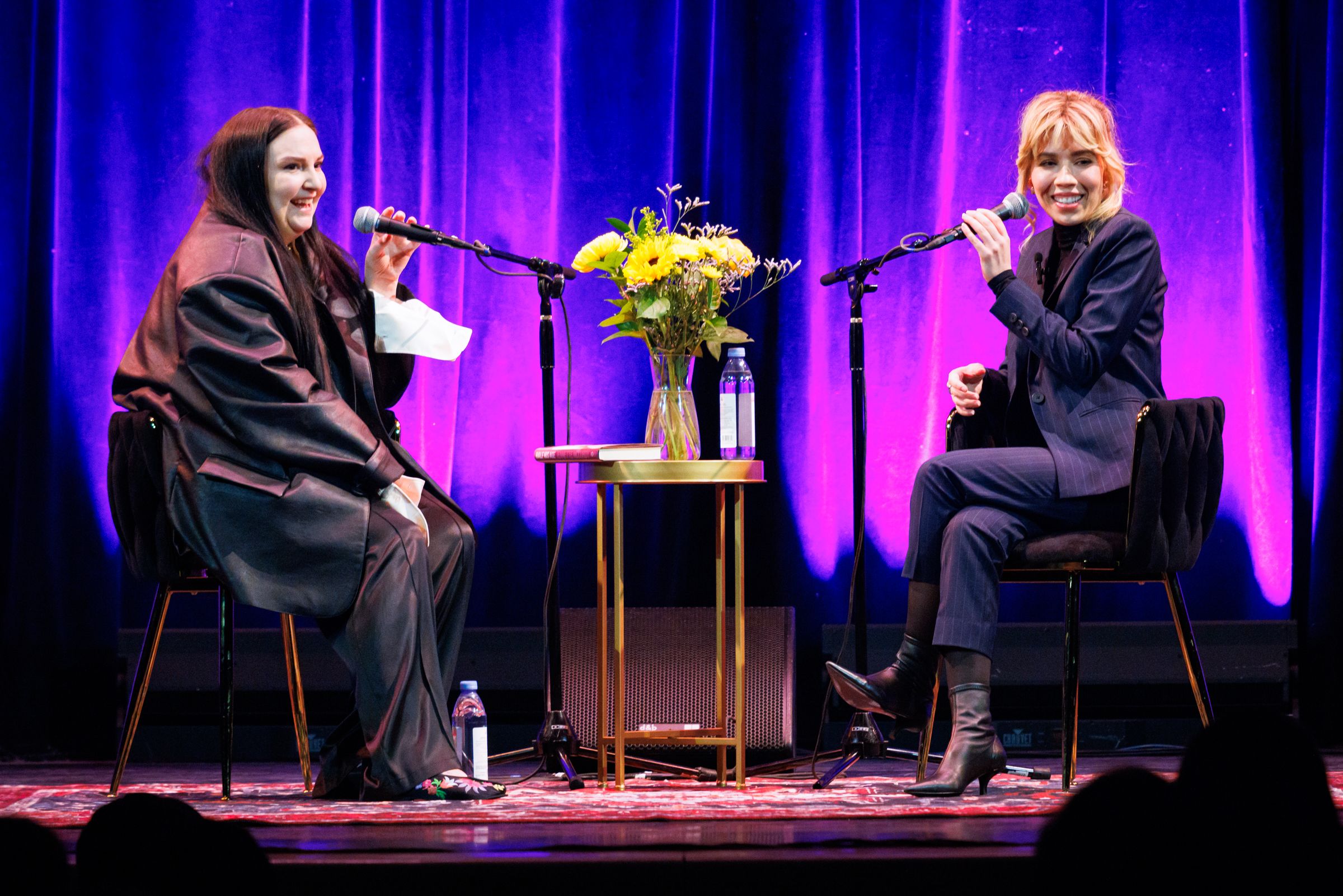
On a cold Wednesday night in Times Square, a crowd of mostly young women filed into the Town Hall theater — founded by suffragists, my press release notes — to watch Lena Dunham interview the writer and former Nickelodeon star Jennette McCurdy about her debut novel, Half His Age.
The crowd was composed of iCarly fans, millennials in balaclavas, and at least one book club, the members of which greeted one another (“Hiiii, ladies!”) around a table piled with dozens of copies of McCurdy’s book.
The audience members I caught in time to speak with were overwhelmingly there for McCurdy. I overheard one person behind me admit she didn’t like Girls; her seatmate hadn’t seen it but was watching Tell Me Lies. Mikey Reid, who played Sinjin Van Cleef on the Nickelodeon show Victorious, came with actor Kaya Rosenthal. Rosenthal, of the Netflix show Hightown, was with McCurdy the night her first book came out. Rosenthal told me it had been an intimate event. (Eventually, the book would go on to sell 3 million copies and last for over 80 weeks on the New York Times best-seller list.)
Onstage, Dunham and McCurdy faced each other, wearing matching power suits. The hot-pink stage lights muted to a refined hot purple. My friend popped a Zyn, “the new girl-boss vice.”
McCurdy’s new novel from Penguin Random House, about a teenager in Alaska named Waldo who pursues a relationship with her 41-year-old loser creative-writing teacher, is fertile ground for subjects McCurdy and Dunham have engaged throughout their careers: power, youth, sexuality, and agency. Since much of the audience had yet to read the book, Dunham and McCurdy spoke in a kind of code about Waldo’s motivations, her ferociousness, and what might appeal to a horny teenager about married, boring Mr. Korgy.
At times, Dunham and McCurdy seemed mismatched; Dunham was lively and hammy and played to the crowd, whereas Jeanette was more measured, addressing questions carefully and thoughtfully like she was at a book talk at the Strand. At one point, Dunham asked a series of first-date questions. “If I met Jeanette at 17, and I was like, ‘What are your top-five interests, and how do you see the world?’ what do you think she would have said?” she asked. Then: “Did you have a favorite color?”
“Probably blue, I guess?” McCurdy said. “I know it sounds like I’m scraping the barrel, but I think this matters, guys,” Dunham said. She explained that she was trying to get into McCurdy’s teenage mind-set to explore the twin engines of self-righteousness and rage that run any 17-year-old.
For Dunham, writing will never feel more fluent than when she was that age, writing in her room alone. “Accessing my inner teenage girl is, like, what makes up probably 90 percent of my entire creative practice because that, to me, was the most joyful time,” she said.
McCurdy’s writing has no patience with nostalgia for an imagined, utopian teenagerdom. She’s interested in the fury that doesn’t have a place, in unruly desire and emotion. At one point in the novel, she writes: “I lock myself in a stall and start to text him that I miss him and that I have to see him and then delete the text and go to his Instagram page and masturbate to it with my chili cheese fingers. The chili burns my vagina. But I keep going and going.”
It was rage, she told the New York Times, that led her to pursue this second project and allowed her to process a relationship she had as a teenager with a much older man. This rage makes McCurdy’s writing candid, which seems to be what her audience responds most strongly to. I was less convinced, though I did read it over the span of one afternoon. I was most intrigued by the book when it let the reader observe Waldo without trying to make sense of her; letting us watch her manic, electrifying Shein binges or her preparations to be ready and beautiful whenever Mr. Korgy might text. The moments in the book when McCurdy doubled down on Waldo’s inner monologue, as if to make sure anyone listening to the audiobook and texting at the same time wouldn’t miss anything, were less compelling. Mileage may vary.
Belen Silva, 27, told me after the talk that when I’m Glad My Mom Died came out, she scoured every Barnes & Noble around her in Texas to find a copy. As a public-school teacher, she felt then that McCurdy’s unflinching narrative was necessary to witness. She felt a similar connection to Half His Age. Silva even knew a Waldo of her own, a younger high-schooler who dated her high-school teacher.
“He’s married to her now,” she said. —Rachel Stone |
|
|
Buy, Borrow, Skip This round, we’re saving you money.
|
|
|
Vigil, by George Saunders
In Saunders’s new novel, spirits like Jill “Doll” Blaine, who’s sent to comfort the oil magnate K.J. Boone on his deathbed, can “whisk” right into the minds of the living. Once in there, Jill sees and understands it all: his childhood, his insecurities, the limits of his imagination and sympathies. The environmentally destructive Boone is just “an inevitable occurrence,” Jill thinks. It’s the kind of move you might recognize from Saunders’s craft writing in A Swim in a Pond in the Rain or his Substack: In his figuring, authors of fiction are finely tuned sensitive instruments, there to empathize — sometimes with the unempathizable — and nudge readers to do the same. The book casts itself as a parable about humanism in the age of climate disaster, but it veers into a fantasy of authorial moral omniscience that verges on sanctimony. It’s hard not to like Saunders, but the result is tedious. Skip. —Emma Alpern
|
|
|
What is the best love story you’ve ever read? The one that either informed, mirrored, or challenged your vision of love and relationships. Tell us a bit about the book or story — and why you’ll never forget it. |
|
|
-
Downloads of the “Game Changers” series through New York Public Library spiked to 13,000 after Zohran Mamdani announced that they would be available for free on e-book and audiobook through Valentine’s Day.
-
Authors and editors can donate time or advice as to Publishing for Minnesota as auction items by midnight, January 28. Proceeds will go to the communities most impacted by ICE raids.
-
CEO of Phaidon Press Bob Miller has announced that he will be leaving the company to launch Bookswork Press.
- Kai Cenat is going live to read aloud.
- File this one under “missed opportunities.”
|
|
| If you're enjoying Book Gossip, forward it to a friend. Send us tips, gossip, or feedback at bookgossip@nymag.com. |
|
|
https://link.nymag.com/oc/63b4a151a01eb21c80050eaeq261a.p3v/0ddb85df
|
|
|
|