What would East of Eden be without Lee the code switcher? On his surface, he’s a set of paradoxes: a learned, American-born Chinese man who chooses to adopt the vision that nearly everyone projects onto him as his mask. He uses pidgin English and the sheen of simplemindedness as a preemptive armor against expectation. Yet Lee is as well-read as he is capable of running a household, managing everything from the Trasks’ bookkeeping to raising the Trask twins from birth. In John Steinbeck's generation-spanning Cain-and-Abel tale set in the lush farmland of Northern California, it’s Lee who gives language to the question that drives the novel: Are our actions preordained or chosen?
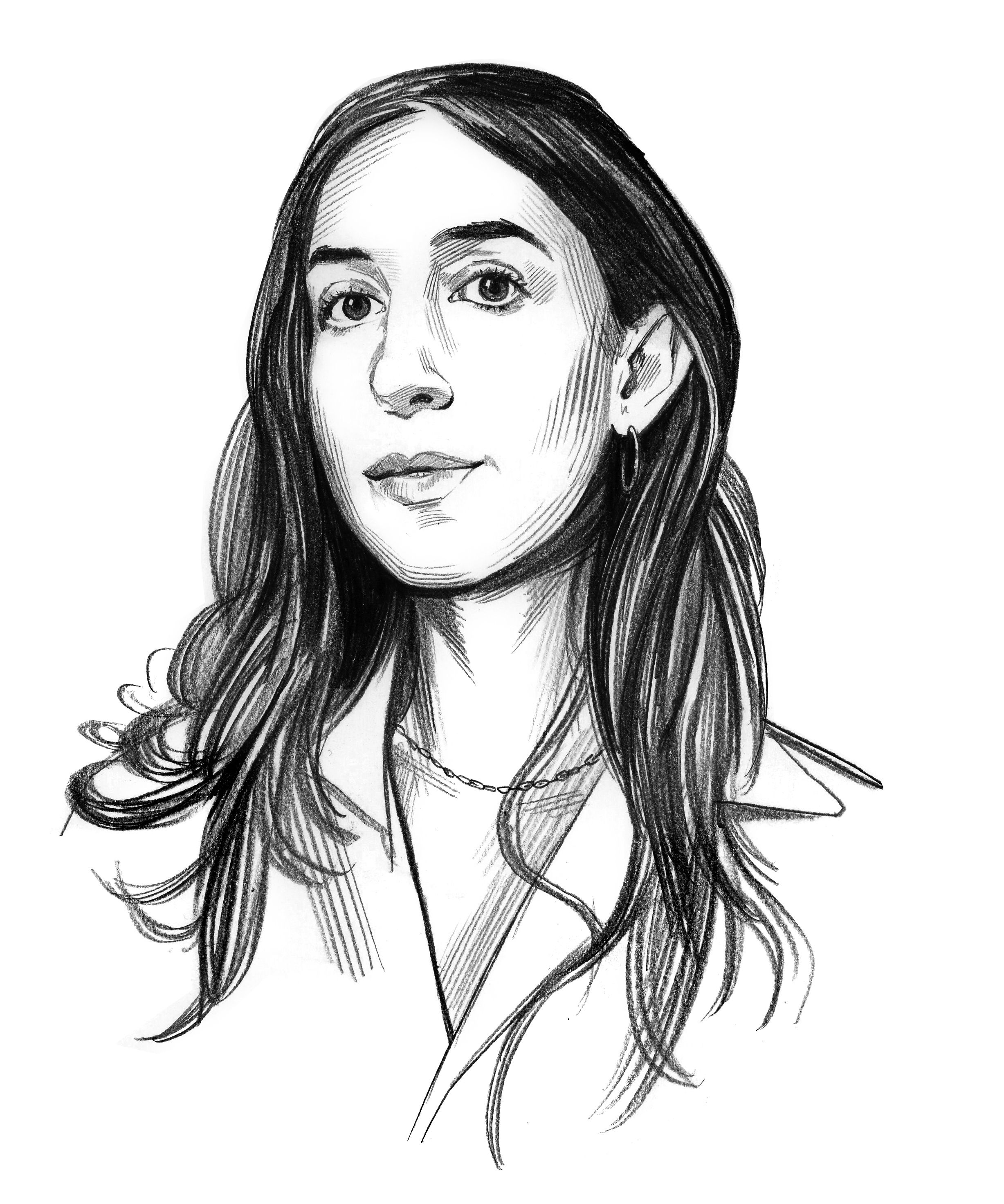
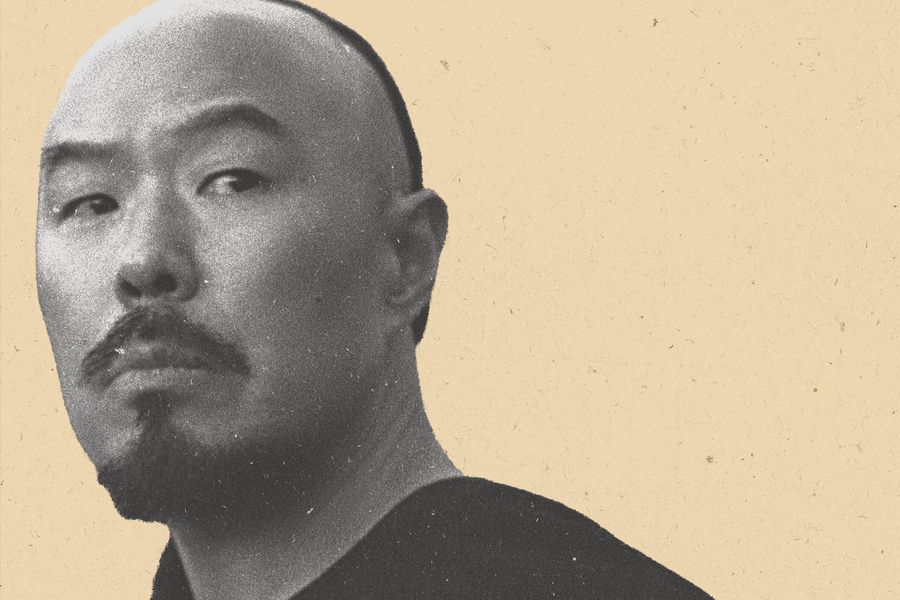
Zoe Kazan’s imaginative TV adaptation of the story dives into the novel’s many fade-to-black moments, at times showing what Steinbeck merely suggests, all while managing to remain rather loyal to the source material. Her grandfather’s 1955 film adaptation of the book erased Lee altogether; Kazan decided to enlist the novelist Alexander Chee to help her bring the fabulously complex character to the screen. Chee shares a writing credit with her on episode five, in which Lee, played by an excellent Hoon Lee, leaves the Trasks to pursue his dream of opening a bookshop in San Francisco. “Part of what she was after was ‘How can we enhance what is latent in the material? How can we work with the material in a way that allows it to be more of itself?’” Chee says. So when Lee goes to Chinatown, he discovers it’s not quite as he remembered it, and what was meant to be a permanent departure from the Trask household becomes another key moment of choice: Lee deciding to return to the only home he’s ever known.
What was your first exposure to the character of Lee?
When I was approached about this, I had to admit
I had never read the novel. I’d seen the film adaptation, which doesn’t include him. That actually drew me in a little bit, because it was terra incognita — with the exception of him being possibly the most beloved Asian American character in American literature. A lot of Asian American people have this experience of reading in lit courses about predominantly white authors and characters and suddenly there’s Lee, who is remarkably legible as someone inside of his social milieu yet almost a unicorn. He was born in the United States under extraordinary and violent circumstances and raised in an extremely resource-deprived situation, but he has community to some extent. That made me give a lot of credit to Steinbeck for producing this very interesting, complicated man who has taken great pains to create this surface for himself that he hides behind.
What was Zoe Kazan’s initial pitch, and what were the conversations about rethinking this character like?
Zoe had sent me a letter about her admiration for my writing and how she had thought of me for this role. There’s a week in the novel during which Lee goes to San Francisco that is implied but not described. She asked me to work with her to dramatize it.
I was interested, but I didn’t feel a connection to him as a character in the way that you have to if you’re going to write someone. I was feeling like, How do I reach this man? When he takes off from the Trasks’, he doesn’t even stick around long enough to give them an address — and also is not bringing his books. I remembered something a friend of mine said when I was moving out to L.A. in the early aughts: “Are you bringing your books?” It was her way of saying, “Are you really moving?”
I knew from the novel that Lee had this community of scholars that he would hang out with, and I was moved by this fantasy of him wanting to open a bookstore. So I started looking into whether it would have been possible. What were the constraints? What were the laws around the renting and the purchasing of property for someone like himself? Also the unwritten laws imposed by the racist government and community around Chinatown at the time. I didn’t know that the empress of China gave money for the rebuilding of Chinatown after the 1906 fire or that there were queer white men in the government who enjoyed going to queer Chinatown establishments and that they protected them, including tipping them off about police raids. I learned that a lot of male Chinese immigrants found the type of work Lee was doing because white women and men didn’t want to do it.
Lee’s character became clear to me when I started asking myself, Why would he stay with the Trasks longer than he wanted to? Why would he pick up all of these roles inside of the household until he became irreplaceable — by anyone except a spouse? [Laughs] That was where I was like, Ooooh, okay, okay. I might know Asian men who have taken on more than their share of caretaking inside of some kind of employment arrangement partly because of love of some kind. I made the decision that Lee was, to my mind, if not out to himself, at least struggling with that inside himself. Because he talks about having an imaginary wife in the novel. That is queer.
Not to mention the kind of chosen family the Trasks become with Lee in it.
It’s wonderful to see in the fullest sense what it looks like for them to all be living together. Did you ever intimate to Zoe that you were reading Lee as a potentially queer character?
Yes, I did. Part of what is fascinating to me about Lee as a character is that he builds a public identity that operates also as a private paradise where he’s in charge of how he’s seen or even if he's seen. And yet because of that tight control, no one actually ever sees him, so he’s sort of drowning in front of these people he loves for inhabiting this idea of a Chinese man that he feels protects him. Part of what I felt like I needed to do was to show how he was dismantling that, which is something Steinbeck puts in motion when Lee reveals to the Irish immigrant inventor, Samuel Hamilton, how he code switches. I thought when he goes to San Francisco, he would try to just be “himself.” That scene where he goes into the real-estate office and is not using his pidgin accent was an important test. The door gets slammed on him.
In the adaptation, the imaginary wife comes back in dialogue, when someone in San Francisco jokes that Lee sounded like he’d been “someone else’s imaginary wife.” It’s a great moment.
I think that’s just one of those things that comes out when you let characters talk to each other. Lee was never going to say that to himself, but I like the idea of somebody else teasing him and, in the process, having him really think about what he was up to. There were lots of reasons about his survival, physical and emotional, that made what he did the best choice, in the sense that he could control the amount of racism that he was handling more than he could if he was out in the world in the way he ends up doing for that week. When I came across the imaginary wife in the novel, I was like, I can’t let that languish. The director gives Lee several beats to absorb that line, so we get to see him go through a number of reactions to it. And yet he doesn’t deny it, right?
Yeah, he’s kind of like, “You’re right!”
To say that it’s better than I imagined is probably right.
Tell me more about the research process. What surprised you?
As a writer, a lot of what you’re looking for is “What are the things that a historian might not bother with because they wouldn’t think to note it?” There was a remarkable set of photographs of Chinatown from that era that helped me think through what street life in that era would look like. We have certain TV shows and movies and songs, but I still wanted to not rely on a kind of silver-screen treatment. I wanted the things that maybe we haven’t seen yet. I was helped a great deal by a few Asian American scholar friends. There was Fae Myenne Ng’s incredible memoir, Orphan Bachelors, about her own family's experiences coming to the United States and during the Chinese Exclusion Act era. The research process was a huge education in what that community was going through at that time. The Chinese who came to the U.S. were trying to survive by leaving their country back home, and then had to survive ours, too.
You created the character of Lucky Lau (Perry Yung), a learned man who was integral to Lee’s dream of starting this bookstore.
But it turns out Lau was gambling the whole time and now he’s running a gambling house.
Lau was my way of working through how Chinese immigrants were making it work for themselves, especially after the quake, when so much of Chinatown had burned or had fallen down. Part of what a racist superstructure creates is the need for some kind of underground economy. But there’s a pragmatism to Lucky Lau that Lee needed to come into contact with.
We knew that Lee had a group of scholar friends back in San Francisco. We also knew that he was friends with some rabbis and that he had people he would visit and drink with, because he would get his Chinese whiskey.
There’s a striking bit of dialogue in which Lee says the only place he’s made for himself belongs to someone else. And Lau asks, “Can’t you make it yours?”
I don’t think that had occurred to him. Understanding his own worth inside of that household is something he had to go to San Francisco to learn, even though he did know it in some way.
I read Lee as a code-switching character par excellence. There’s no world in which he really belongs, except the one he then creates for himself, but he has to leave it in order to claim it as his own. He missed home, but he’s also laying down the law for how it’s going to be from now on.
I think it has to be one of the earliest descriptions of code switching in a novel. In the adaptation, I wept when he comes home and he’s tucking the boys in. So much of Hoon Lee’s performance is in what’s going on in his eyes in any particular scene, the way he’s capable of transmitting so much without saying anything about what Lee is going through — that incredible doubled loneliness of not feeling like he belongs in Chinatown or San Francisco or on the ranch and having to figure out how can he be okay. It was an honor to get the chance to work with this beloved character of American fiction, even if I didn’t know him from before. He’s not even in the movie adaptation.
It’s hard to imagine the story without him.
The thing that’s so peculiar is that, even though he’s not the main character, there is a way that Lee carries the novel’s heart.