| A Subscriber-Only Newsletter |
| |
|
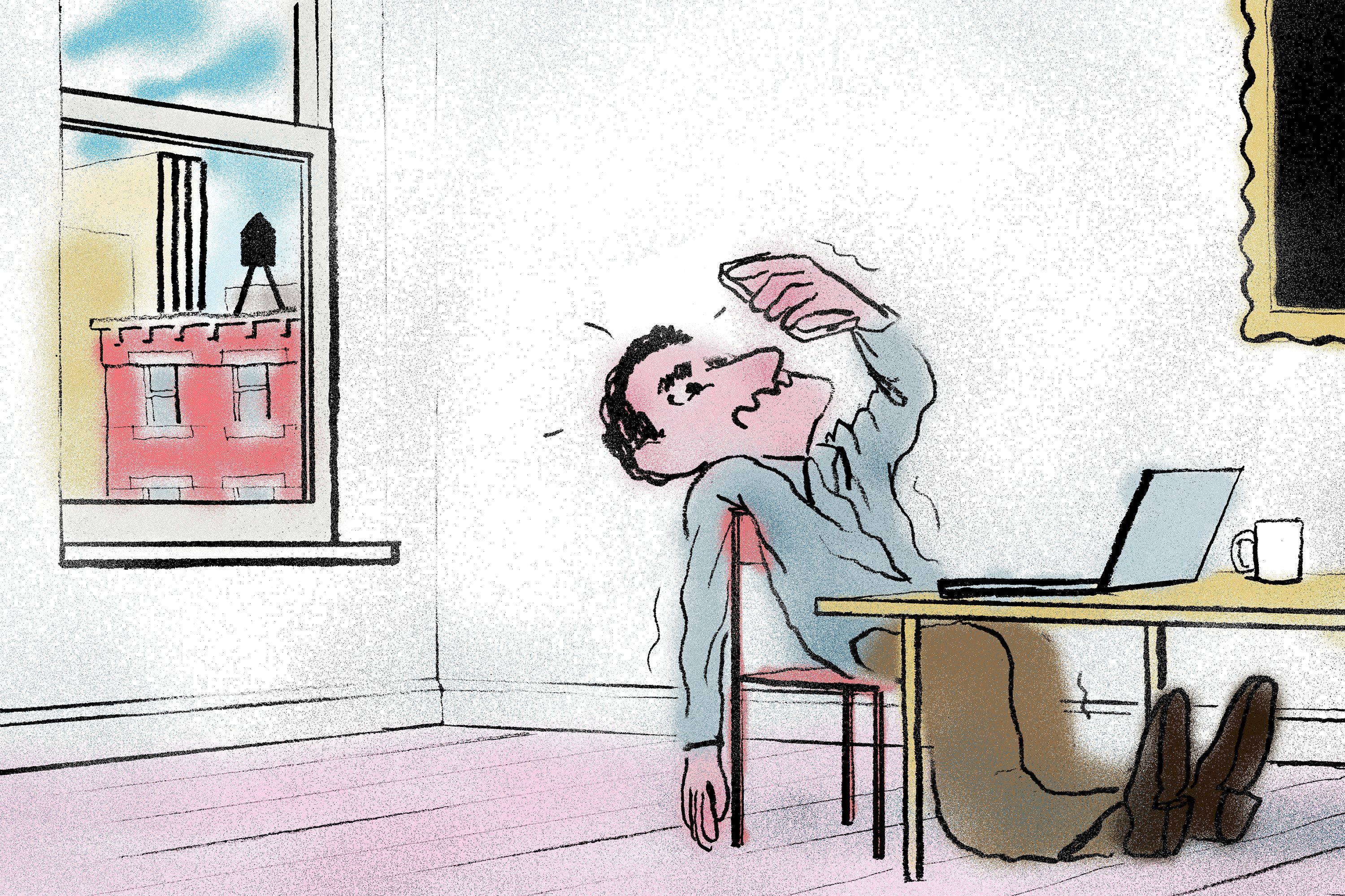
Illustration: Matija Medved |
What Makes a Good Personal Essay? A conversation with Allison P. Davis, Emily Gould, and Joy Shan. |
The world can perhaps be divided between those who feel compelled to tell their own story and those who’d much rather devour the stories of others. (If you’re neither, are you even human?) I, for one, am in the latter camp, but for those who want to get better at narrativizing their lives, you can’t do much better than learning from two masters of the craft, Allison P. Davis and Emily Gould.
I have been reading Emily’s searing, deeply honest personal essays since the bad old Gawker days. She recently set the internet alight with her riveting portrait of a marriage on edge in her essay “The Lure of Divorce” and her investigation on middle age, “Old Young Person.” Allison, in contrast, is a longtime writer with the magazine who only recently turned to more personal writing, memorably in her essay on ten years of dating on Tinder and her group-chat-destroying story on what babies do to friendship.
I also asked editor Joy Shan to join the conversation. Joy has helped bring in some of our most memorable recent personal essays, including Mary H.K. Choi’s on her adult autism diagnosis and “The Divorce Tapes,” by Beth Raymer, and she has a great perspective on what separates a truly excellent personal essay from something that should maybe stay put in your journal.
Even I, who find my life way too pedestrian to make an interesting story, learned a lot from this conversation about how to take the stuff of life and mold it into a compelling tale. (It turns out the same rules of storytelling apply whether you’re crafting a novel or unearthing your own biography.) I also gained a tremendous appreciation for the writers who take the risk of putting themselves out there so we might learn from their lives. We owe them all a debt of gratitude. —Genevieve Smith, executive editor, New York Magazine
|
|
|
Lesson #1: Write like no one will ever read it (at least on the first draft). |
Genevieve: Emily, I'll start with you because you've written about yourself for a very long time now. How do you figure out what parts of yourself to share and what to hold back?
Emily: There's definitely some disassociating that happens when I write, where you wall off the you that goes out into the world and interacts with people and is a human being from the writer self, and you have to make sure that those people don't meet each other. For the first draft, you have to hypnotize yourself into believing that nothing you write will ever be published in a way that people who know you in real life are going to interact with it. And then for the second draft, you can let the other voices back in. But for the first draft, you have to fully believe that you are the only person who is ever going to see those words on the page.
Allison: It's like you're describing Severance. I feel perhaps a too-integrated self. I don't know if that's good or bad, but I can't shut up my outside me when I have to sit down and write. I'm constantly editing as her, like, "Ooh, do you really want this out there?” Or, “Is this too emotional?” Or, “Is this too much of your interior life that should only belong to you?" Then I have the chorus of other people’s voices, in addition to myself, who are like, "You're a loser. Nobody cares about this." Emily, I'm sitting here really inspired by your ability to do that because I don't understand how you can hypnotize yourself to not read as your critical self all the time.
Emily: There have been times when I've thought that I would be able to switch it on and then the magic hasn't happened, but for me, sometimes I do feel like there's this overriding need to just get something down so that it is a narrative that exists outside of me, so that it becomes an experience that I've had, as distinct from a part of my living self. It's actually sort of a trick I play on myself. If I write about this problem that I used to have, then it becomes something that's now in the past.
Genevieve: Now it's just a funny story. Emily: I mean, we're basically quoting the last chapter of Heartburn at this point. Genevieve: Do you both have a writing practice that exists outside of your job? Are you diarists generally?
Allison: I'm sure you're not surprised to hear I'm an inconsistent diarist. I try to keep a commonplace book because sometimes just writing down what I saw in a day, or what inspired me in a day, helps me get into a flow. I also do this annoying thing where I sleep with my laptop and start writing whatever’s on my brain as soon as I wake up, just to get things moving. I've been told that it’s a really disgusting habit, but writing in the morning is like having morning sex: Your guard is down, you’re in your most vulnerable state, and so the thoughts come out. One would prefer to have morning sex, I'm sure, but right now it's my laptop. Also, I just have bad handwriting.
|
|
|
Lesson #2: All the rules of good storytelling still apply. |
Genevieve: I find myself oscillating between thinking everyone has a story to tell and most people don’t have a story to tell. For myself, personally, I like my life, but I don’t tend to find it particularly interesting narratively. But maybe that’s wrongheaded since so much good personal writing perfectly articulates common experiences. How much do you see your own writing as trying to tap into a universal experience versus trying to tell a singular story?
Emily: I mean … okay, whatever. I'm 44 years old and I have no fucks left to give. And I'm just going to come out and own the fact that I think I am just naturally gifted with a storytelling voice. I have a good innate sense of how to draw someone in, how to keep up the momentum — the same kind of performance qualities you need when you are actually telling a story live in front of other people. You need to be able to keep your audience engaged with you and pull them along the thread of the narrative. So to go back to your question, as a journalist, I think everybody has a story to tell. I just think that they themselves might not necessarily be the best person to tell it. And then there are people like Rachel Cusk, who can make sitting next to someone on a plane and having a chat with them so compelling you're turning pages trying to find out what happened.
Genevieve: I guess what you're saying is you think that a lot of it rests on your storytelling ability, that crafting a good personal essay is a lot like writing good fiction. All the same rules apply about building character and voice and perspective and pacing the plot.
Emily: It's in some ways easier because you don't have to invent plot or characters, but it's in some ways harder because you have to accurately remember what happened.
Genevieve: Joy, I asked you to come to this because I was curious about the perspective of someone who has helped writers — who, in a few cases, weren't professional writers but had a story you were able to recognize was special — craft their complicated experiences into a polished piece of writing. Two that I’m thinking of in particular are “The Last Thing My Mother Wanted,” about a woman with a very difficult mother who chooses to end her life, and “The Divorce Tapes,” which is a really wild tale about a woman who discovers taped phone conversations between family members that reveal their complicity in ignoring abuse. I would say both of those authors were really good writers, but is there anything else that separated them from the many personal essays we’re sent that don’t quite rise?
Joy: I think they both felt a bit timely, or at least Zeitgeist-y, which matters to us because we're a news magazine. When considering essay ideas, I’m drawn to ones that contain a kernel of something that speaks to some discussion happening in the broader world. “The Divorce Tapes,” for instance, was in many ways a response to the revelation that Alice Munro had kept quiet about the abuse of her own daughter for years. Beth Raymer, who's written both novels and memoir, had pitched it to us after that story broke, and her essay was another way of examining this very painful family dynamic we were reading about in the news. And I think both stories felt “extreme,” if that makes sense. They each address something very universal — the secrets families keep or the pain of saying good-bye to a parent you don’t have a great relationship with — but the stories themselves felt like the most extreme version of both of those experiences. In terms of what the magazine publishes, it helps to check those boxes.
Genevieve: I also just think voice really matters in a personal essay. You have to want to be with the person. When you're in a personal essay, you are riding shotgun in their life. And both Emily and Allison and also Mary H.K. Choi, whose essay on receiving an autism diagnosis at 43 you edited, Joy, are voices on the page you want to be around. | |
|
Lesson #3: Don’t overcook it. |
Joy: Does this era of personal essays feel different to you from the last one? I've been thinking about that. To me, it feels like after the 2015 Jezebel era, we overcorrected, and there were very few personal essays for a period. Now they're back, but maybe in a different way.
Genevieve: I mean, I'll say from my perspective, I think editors now are more compassionate. I think editors of that era were a little more okay with watching someone kind of devastate themselves on the internet. There was a sense of, "Wow, this person's clearly falling into drug addiction. Keep writing." And I was not editing those things, but I think editors these days are much more conscious of protecting their writers, even if you can't always and you don't always know how people are going to respond.
Emily: I mean this is pure conjecture, but I saw so many people on Twitter and Instagram being like "I'm done with Meta, I'm done with Elon Musk" as the Trump administration was starting, and they're migrating to Substack and Tumblr. If this continues, we might see an efflorescence of old-fashioned blogging. I'm a big fan of the medium and an unofficial scholar of it. There's that old “the raw and the cooked” distinction. I know I'm not finding a favorable audience saying this to editors, but sometimes it is fun to read totally unmediated writing.
Joy: Completely agree. I find it so refreshing. Emily: Not all the time, though. It's sort of the same way that you would not want to eat raw food all the time.
Genevieve: One challenge if you edit personal writing is to help evolve it while also keeping that rawness and not edit it to the point where it stops feeling authentically vulnerable.
Joy: Yes. I often think about this thing Paul Thomas Anderson once said about how Daniel Day-Lewis acts — something about how when Day-Lewis says a line, he flings it out and you can still smell the “stink” on it. Anyway, I completely agree with you, Emily. I love when something feels kind of dashed off, not overprocessed or overdigested.
Emily: Someone didn't have time to second-guess themselves or insert that paragraph that you see in so much personal writing that's published: “As a person who has two legs and has never known food scarcity …” Allison: I like it when someone's a little willing to offend. You just got to keep it interesting! |
|
|
Lesson #4: You can’t control people’s reactions — but you can prepare yourself for them. |
Genevieve: Allison, you really did not ever want to be a personal essayist at all and I know you sort of hate every moment of it and like to tell me as much. And I really wasn't trying to trick you. It just happened with the Tinder essay that we assigned you to do a story on Tinder after ten years, and then it just turned out that the best parts of your draft were your own journey through the app, probably because you could be way more emotionally honest and also give a longer view than anybody you interviewed. But your first impulse was to talk to a million people, and aside from my coercion, what made you decide to be yourself in the story?
Allison: I don't know if I ever fully decided that one autonomously. It's interesting because my first job in journalism — when all I wanted to do was work at Jezebel or Gawker and talk about myself, but they wouldn't hire me — was at Wired. My editor was this nerdy white guy, who in our intro lunch was like, "Your generation thinks you're the most interesting thing to talk about. If you want to succeed, you should know you're not that interesting. The best thing you can do is to pick something else, report on it, and leave yourself out of it." And so I tried to do that for a really long time. But I think I'm at my best when I'm part of the story because for better or for worse. I have a slightly unique view on things and I observe more than the average person. Being part of the story is always my first instinct, but not as a main character, more like a guide through this world, or through an experience, or an experience of a person. With Tinder, it was sort of like the story just called for me to be there because I could be my own longitudinal study in that way.
Genevieve: The same thing happened with the essay about how babies change adult friendships.
Allison: The baby essay, trickily enough … I don't regret it; I do think it was a story that sort of called for a person like me at the center, but it just became me. Actually, this is something I wanted to ask you, Emily, I was still way too in medias res in my own life when I wrote that. I was dealing with understanding my place in my friend group and what wanting a child or not wanting a child meant to me as a single woman, and I was working through a lot of stuff in the process of writing and reporting it. A lot of times when I want to be the main character in a story, it's because I go through an interesting journey and have come through it with a conclusion for both myself and for the reader. But in that one, I was just really in the muck and I never found my way emotionally. And I think you can tell on the page that I swing from disaffected to bitter to an aging party girl to a little whiny bitch baby. And none of those things feels like an accurate representation of where I ended up after I sort of processed everything. So I'm growing more comfortable with accepting that sometimes you are the most interesting way to tell a story, but I haven't figured out the magic moment of when to put it on the page.
Joy: Are you saying that if you had written it after you processed that whole journey more, it would have come out differently?
Allison: I think it would have been more insightful, and I think I would have been kinder to myself in a way that would have made people relate more to my stance. At the time of writing it, I really did feel an acute sense of, Everybody is leaving me behind and I'm so sad about it but I don't want to write that because that's too vulnerable. But I'm also really resentful because they have a chance to do something that I won't ever do and I'm out of this club and that makes me really mad. And I think if I had some distance I'd be able to sort of acknowledge all of those parts without it feeling too scary.
Emily: But you wouldn't really change anything about it. Allison: I might have been a little less bitchy. Joy: I loved the writing in it. Emily: Wait, wait. Did you get in trouble?
Allison: It's interesting the way I got in trouble. My very close friends who are in the piece, we talked through everything and I asked them if they objected to anything. There were a couple of things they did object to, and we fought about it a little bit. Then, we all cried when the piece came out, and none of us are criers, so that was a very strange and new experience for us after almost two decades of friendship, and I think all of those friendships are so much stronger now.
But then the weird responses I got were from these medium friends, and they saw themselves in it however they wanted to. They got really angry, and I had to answer to those people and their opinions of me. One person mentioned they couldn't believe I was writing this while they were experiencing the birth of their first child. And I was like, “You're not in the piece. I wasn’t thinking about you at all.” And they're like, “That's even worse." With people like that, I could only win when I admitted that I have fertility issues and that has played a part in my decision to remain childless. I felt like I had to sort of shrink my stance. And I said, "If I could have a family, I would, but I don't think I can have children without IVF, and that's very scary. Also, I don't have a partner and don't know if I'll wind up with one, and I don't want to have a child without a partner." One conversation, I told them about my fears around Black maternal deaths and how I didn’t even know if I would live if I had a baby. All these things are true, but it had nothing to do with that piece. One friend, who is a white man, looks at me and goes, "I feel like you really should have put that stuff about your race in there.” It's so frustrating to think about the ways I failed to make myself palatable. And this is probably why I can't ever divorce the two selves because I do always have to be so aware of how to make myself as a Black female writer palatable to an audience that really feels a lot of freedom to turn around and tell me I'm like a demon for having opinions that don't match their lives or that seem critical of their lives.
Genevieve: To me, those people are just having their own feelings, and those feelings have nothing to do with you. You actually did what I think a good personal essay does, which is surface complicated feelings. And maybe you did feel like there was more processing to do, but you also made people confront themselves, and if that made them angry, that’s on them. That’s not on you.
Emily: While you were talking, Allison, I got the heebie-jeebies, and my heart started to beat faster because of how familiar that was, especially when you talked about the middle friends or acquaintances, people who think that the story should have been about them. And I don't have an answer for those people. Start a Substack if you want to be center of the narrative and best of luck to you.
Genevieve: Emily, how do you prepare the people in your life when you’re writing about them?
Emily: When I was a lot younger, I definitely thought, It's art; their opinions don't matter. And when you're really young, you can be really fearless. It's also a great time in your life to write book reviews. Just get all of that stuff out of your system before you have any sort of network of allegiances. But now I try to give people the appropriate amount of heads-up, to give them some feeling of control when that's possible, when there are things that I'm willing to cut or change, when the relationship is more important to me than saying something exactly the way I want to say it. And I'm just really lucky that I have a partner who is not coming fresh to the idea of what the work of memoir is. He has written a memoir and has written a lot of autobiographical fiction, so I think in some ways that makes having those conversations a little bit easier.
I'm less dogmatic now, but the list of people whose opinions I really care about has also just gotten smaller. Of course, some internet rando can still cut me to the quick when I least expect it, and I'll find myself thinking about something hours later and wondering, How is this still happening to me? It would be really cool to be one of those writers who is universally beloved and everyone is just like, “My God, I wish I could meet her. I want to be her best friend.” But when I think about who those writers are, do I want to read them? If you're not going to be honest or revealing at all? It just doesn't make any sense to me. I guess I am working on coming to terms with the fact that I am not everyone's cup of tea. Not everyone is going to like me or agree with me. And that is okay, but it would be cool if more people liked and agreed with me and just approved of me and my life choices in general. I wouldn't have a problem with that necessarily.
Genevieve: Some of what you're talking about isn't just the people close to you who know you and presumably love you but what happens when your story goes out into the wider world and you're getting responses on your life and your life choices from strangers on the internet. You talked about making the separation between the you who's writing the story and the you who actually lives out in the world. Is there another you that has to protect yourself once it's out in the world? Do you say, “This wasn't me. This was just a piece of writing?”
Allison: I sometimes say, “What do you want? My job is to write things. I don't come to your job and tell you how to do it.” I wrote a profile of the romance novelist Emily Henry a couple years ago right at the same time I was about to enter my first relationship in eight years. So a lot of that piece was me trying to figure out how I felt about intimacy and romance. And so it was quite personal without being about me. And I stumbled upon some Reddit thread about it and how I got everything about romance and love wrong. And it was momentarily quite devastating to me to read that, but I will say a former mentor of mine gave me advice once when I was responding to Twitter trolls about something. She sent me a text that was like, “You've got to learn that people aren't talking to you, they're talking about your piece. They're talking about a thing you've put in the world that is really no longer yours.” And if I can divorce myself and say the conversation's about the thing, not about me, for the most part I can get through it.
|
|
|
Lesson #5: Put the struggle on the page. |
Genevieve: Is there a trick to editing a personal essay?
Joy: I routinely find editing personal essays to be harder than many other types of editing. As an editor, it’s my job to pry and ask semi-invasive questions, but I often want to be careful especially when the topic is potentially sensitive or painful. There have been some stories where I should have just asked the awkward question I wanted to ask at the beginning, and that actually would have saved us a lot of time and a lot of labor in the long run. The other editing challenge is that sometimes, for the purposes of the story, you want the writer to wrestle with something tricky or complicated, but sometimes the writer just doesn’t feel any conflict about it, in which case there's nothing much else to say. So sometimes you're butting up against the boundaries of how the person even thinks about their experience.
Genevieve: It's interesting that you say that because I do think personal writing still has to have conflict and sometimes the conflict is the dramatic thing that happened to them, but a lot of times the conflict is within your own self and feelings. You're reading to watch them work it out on the page.
Joy: Yes, absolutely. And sometimes the thing you expect to be the conflict isn't the real conflict. We ran into this with the first drafts of Mary's essay about her autism diagnosis. Initially, I’d assumed that after she received the diagnosis, she would struggle to accept it, and that this would be a significant source of internal conflict in the story. But that’s not how it actually happened in real life — for her, the diagnosis kind of explained everything pretty clearly. That meant that, in the essay, when the narrator gets diagnosed halfway through the piece, everything feels really solved, and it's actually not fun to be in resolution for half a piece. The tension is gone. It's a little anticlimactic. So Mary and I had to figure out, How do we find another knot to unknot and to delay the resolution a bit?
Genevieve: Emily, in your essay on near divorce, we do really see you struggle throughout the story.
Emily: Yeah. I mean, that was more of a case of me having this big dramatic thing, this just huge thing plop down in the middle of my life, where there was a before and an after. It's definitely the biggest rupture of my life this far. There have been other things I can point to, before and after my children were born or before and after I was humiliated on live TV in front of millions of people. But this is definitely the most major, and it lasted for the longest amount of time. Basically, this lost year and a half of my life. And I felt this pressure to redeem that time somehow. It had to have been for something, like I can't have just suffered for no reason. My recollection of how the story came to be is that I originally came in with this idea that I'm going to write about all these new books that are coming out that are about either divorce or how difficult heterosexual marriage is, and it's going to be 70 percent book review, 30 percent my personal experience, and then, of course, it ultimately was 70-30 in the other direction. So I had to be coaxed like a little weary animal into inhabiting that scary “I.”
I remember another story I wrote about how I squandered my advance for my first book, and there's a very delicate dance that I think editors of first-person writing do where they're getting you to show just enough of your ass, but not the whole ass. That is their job, and it's good to go into it knowing that the editor is not your friend. Genevieve: "Can you just pull your skirt up a little bit higher?”
Emily: And you can push back without becoming difficult. You can give them one and then take one for yourself, but there was one thing that I had initially written in that essay that the editor really wanted me to include and I am so glad that I took it out because I think it was a legit potential life-ruiner. So I'm just grateful that little child, 33-year-old me, had the wherewithal to be like, “You're pushing me outside my comfort zone.” Would it have been a better essay? Probably.
Genevieve: Tell me then, knowing all this, what kind of advice would you give to somebody who thinks they want to do this kind of writing? Emily: I have a canned response to this one from my years of being an adjunct professor, which is that you have to treat all your characters with respect, including yourself, if you're a character in your own work.
Allison: I'm in writers’ rooms for TV sometimes, and more so than even working at a magazine or writing for the internet, that’s one medium that expects you to come in every day and trauma-dump on the table for the purpose of building story. I come into a room full of strangers, barfing up details about the thing my father said to me when I was 12 that I still talk about in therapy, so maybe we could use it for a character. One thing I've learned in that process is that you can’t just tell a personal story to fill air in the room. Every personal anecdote has to have narrative value. It has to answer a bigger question. It has to move the plot along. It has to contribute to a theme or a character motivation. And so now I think about personal essays like that: Is it an essay or is it just, like, something I tell my therapist on Wednesdays and Fridays? It's like, What plot is this furthering in the world? What character motivation is this serving? And that has kind of been a good north star for me.
Genevieve: Well, thank you both for being willing to put so much of yourselves out there. For all the haters, there are so many readers who appreciate seeing their lives and experiences reflected back at them or having their worldview expanded, especially for the uncomfortable topics like money, marriage, and sex that don't get talked about enough. When you see it reflected in a great piece of writing, it’s just so good. Thanks for joining us. Next class, we'll be talking about story structure with Reeves Wiedeman and Simon Van Zuylen-Wood. Here's your syllabus: Suggested Reading:
➽ "Hush-Hush Affair"
➽ "Aaron Bushnell's Agonies"
➽ "The Spine Collector" Extra Credit:
➽ "What Was Kyrie Irving Thinking?"
➽ "Bill Ackman Strikes Back"
➽ "The High Priest of Cryptopia Regrets Nothing" If you'd like to revisit previous editions, you can do so below:
• Where Do Good Ideas Come From?
• Finding the Truth
|
|
|
|