Few people know Shakespeare as well as she does. The “she” in question is Sara Holdren, New York’s Pulitzer-nominated critic, theater director, and in-house classics expert. To be fair, she’s been at it for a long time. In kindergarten, Sara was already reenacting scenes from her Charles and Mary Lamb retellings of the plays; by 16, she was summering at sleepaway Shakespeare camp. Proximity helped: Sara grew up in smalltown Virginia, just around the mountain from the American Shakespeare Center, which, as she entered high school, had just finished its Blackfriars Playhouse, a replica of the London theater that housed many of the Bard’s productions. Sara’s passion for theater was so full-bodied that she eventually converted her parents to the craft too. “My father started acting and directing and sound designing and my mother started costume designing,” she told me. “I call them the premier theater couple of Charlottesville.”
In her work as a director, Sara loves the particular challenge of adapting a classic for a contemporary stage, especially Shakespeare: to make something at once sophisticated and inviting, something that wins over the skeptics in the room while also enriching the most rabid devotees of the text. That’s why, as a critic, she is disappointed by productions that tend to split the difference and water down the poesy — of which there are too many. “Audiences are always smarter than you give them credit for,” she said.
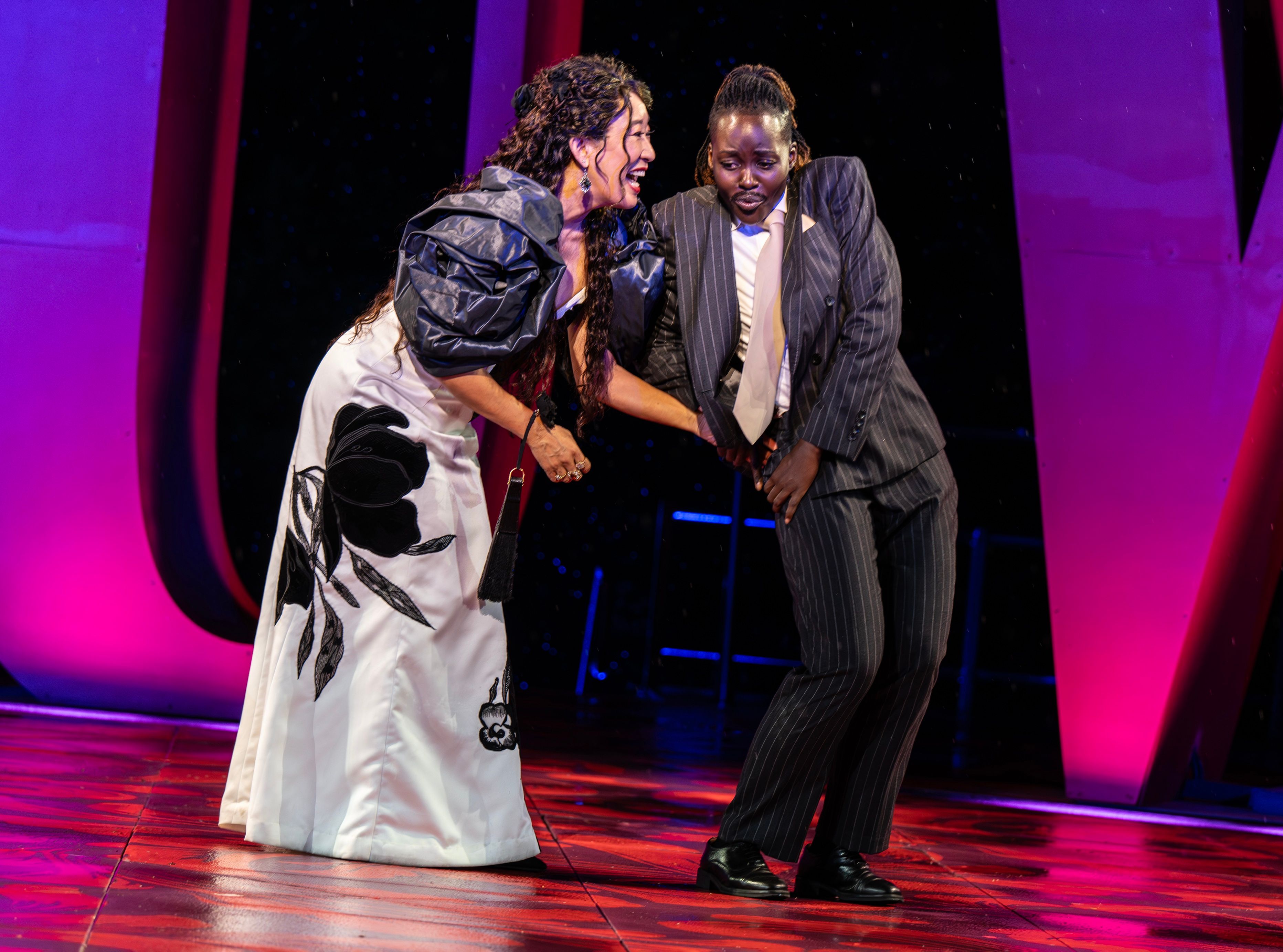
Shakespeare in the Park’s latest production of Twelfth Night, which opened this week, felt to Sara like another missed opportunity. At the freshly renovated Delacorte, the mandate to have fun is so strictly observed that the play has lost some of its murkier, pensive potential. The critic had a similar feeling after seeing the company’s previous version of the comedy in 2018. “The idea that we all have to have a good time is just not as interesting to me as the idea that we could all come to some amazing revelation together,” she told me. “The sine-wave graph of these plays is so intense and people are sticking to the middle.” Luckily for us, Sara is back from maternity leave (just in time for theater season!) and she agreed to talk to me about the Bard.
First of all, welcome back! I loved that your review included some important personal context for you: returning after hiatus and “writing this with a baby asleep in my lap.”
Being in the critical field can feel very isolated. You don't know who your readers are. At the same time, I want to be a person. My summer held this momentous, life-changing thing, so it felt disingenuous on some level to not be like, “I'm back now and I'm thinking about new beginnings and magic.” A play like Twelfth Night has that feeling of new life and magic. I think context is everything when you're reviewing a show.
When did you first viscerally feel like you understood Shakespeare?
I don't know that there’s a point where you get it for good because it's so rich. Some of the most wonderful moments I've had directing or watching Shakespeare is when I full-on realize something new. This time, it was a line that Olivia says to Sebastian that is almost always played as a question: "Would thou’dst be ruled by me?" (And he says, "Madam, I will.") But Olivia’s line is actually a statement, a wish. It's a completely different conversation if she's saying something to herself that she doesn't think will come true and he says, "Actually, it can."
This is the third Twelfth Night production you’ve reviewed for Vulture. Back in 2017, you mentioned a few of the forces in the world that were challenging Shakespeare productions, from Shakespeare companies and artists thinking the work isn’t actually accessible to snarky op-eds arguing to stop producing the plays. How do you envision the future of Shakespeare now?
That was a totally different era in that none of the questions we’re asking about AI and people falling away from writing and reading in college were even on the table. I feel the way I feel about a lot of big things, which is simultaneously despairing and hopeful. I don't have a lot of hope for institutional revolution, but I continue to meet people who love this work in a deep way and who relate to it in a caring way. Productions will pop up where you're like, “That’s it.” I have a bit of a bias thinking you often see these things in scrappier forms, but not always.
I'm going to use an analogy. When I went to college, I thought it was going to be beautiful poetry and people having tea and discussing literature and playing violins on the green. And I was freaked out by people throwing beer bottles out of windows and having sex in the living room. Once I had found a couple of my own weird people, I had the realization that everywhere is a microcosm of the world. Most of it I will find horrifying and some of it will be exquisitely beautiful.
Twelfth Night is also a play that you yourself have directed. When it comes to your criticism, how do you separate what you wish a show was if you were at the helm versus taking it on its own terms?
It would be pointless to deny that I'm close to the text. I believe that directorial engagements with these plays need to begin with a deep dive into what the beating-heart question of the play is. Once you're grappling with what the play is about then the path back out towards design and how the character looks can go in any number of directions. So when I'm writing as a critic, that's the thing I'm trying to identify — the deep truth. Criticism and directing start in the same place.
What's really going on in the heart of Twelfth Night is a difficult question. For me, there's a deep, beautiful, ambivalent question in the play about how well we can ever know the lover and also ourselves. Violet's disguise leads into that question and we end up with two couples at the end of the play who have really never even known each other. I think that's a metaphor for every union. It doesn't matter how long you've known the person — there's always going to be this shadow of mystery and a necessity to trust. Maybe a great part of you and a great part of me are always behind the veil and yet we can go forward together.
I also believe that things are funnier when they're more serious, that there's a paradox at work where I end up laughing so much more at things when I'm also feeling alongside the characters.
Tell me more about Sandra Oh's performance. It was lovely to hear you gush about her at the end of your review.
We think of Shakespeare as so heady and intellectual and talky. When it's good, you see what a physical thing the language is — how much it fills bodies and propels them and how sexy it can be. If somebody is accessing that, suddenly there's air in the room. Sandra Oh felt so present and released and comfortable in her own skin as an actor. In America we have a lot of acting training that's obsessed with authenticity in a way that I don't find very interesting. Artifice is sort of scary to us. But this is written in iambic pentameter — there is artifice built in from the beginning.
To be an exquisite Shakespearean actor, you have to be able to balance that sense of outside and inside. You're both deeply your character and you're also a crafts person puppeting the character and thinking about the language. Sandra Oh has enough poise as an actor to have that sense of craft, but to also be cute and real and playful and full of delight when the play requires it. She felt so free.